This journey combines archaeology, history (ancient, medieval and modern) and gastronomy together with Crete’s wonderful landscapes, offering a deep exploration of the island’s heritage from Minoan times through to World War Two, travelling through traditional villages and dramatic mountains and, of course, savouring Crete’s noted and superb local cuisine. It’s designed for travellers who want to understand the island’s culture through expert‑led visits, gentle walks and memorable meals.


Our Exploring Crete tour is the ideal opportunity to experience this fascinating island to the full. You will visit its most important ancient sites, including the famous prehistoric Minoan palaces, but also veer off the beaten track to explore many of Crete’s hidden gems. Our tour of Crete includes a vast variety of different landscapes and ancient sites, bringing you into direct contact with the island’s coasts, mountains, gorges and fertile plains, as well as its historical villages and towns.
Crete is the largest of the Greek islands and its historical significance is second to none, ranging from Stone Age seafarers and Neolithic farmers to the mysterious and fascinating Bronze Age civilisation of the Minoans. The island’s renowned Classical cities and the rich remains of the Roman, Byzantine, Venetian and Ottoman cultures lead us right through to its turbulent 20th century history.
As well as its historical and archaeological riches, the island is a place of extraordinary natural beauty and diversity. Its inhabitants are fiercely proud of their homeland and maintain its many traditions, including the fabled Cretan hospitality. As a result of its varied nature and past, Crete also boasts one of the most celebrated variations of Greek cuisine.
Our Crete tour is complemented by excellent meals in carefully selected restaurants and tavernas, as well as wine tastings from regional vineyards. At night you will be staying in beautiful surroundings ranging from high-quality modern city hotels to beach-fronts with immaculate views to elegant Venetian palazzi at the heart of historic cities.
Your tour guides have excavated, surveyed, researched and travelled around Crete and are passionate connoisseurs not only of its archaeology, but also of its landscapes, people, traditions and products. Their in-depth knowledge will be your shortcut to a superb experience of one of Europe’s most celebrated destinations.
If you have never visited Crete, this expert-led archaeological tour is the perfect way to explore this wonderful and fascinating Greek Island; if you have been before, we are sure you will see it afresh and from a completely different perspective – in the company of two archaeologists who know the island intimately.
Our Tours receive an average rating of 5 out of 5 from 360 reviews, according to AITO reviews.
Day 1: Arrival in Heraklion. Transfer from the airport about 15 minutes away. Welcome drinks and dinner. Our city hotel will be our base for the first two nights.
Day 2: For the Minoans, the extraordinary natural world of Crete, pierced by caves and overlooked by high places which so move us today, provided an abundance of locations to meet or commune with the supernatural world and the gods. So it’s appropriate that our first visit, after a journey admiring the harshly beautiful landscape, takes us to just such a place: Skoteino Cave. Bronze Age Minoans of the palace worshipped, and occasionally took refuge, in this site which is also associated with some of the greatest names of Cretan archaeology.
Having seen the Minoans’ use of the natural settings of their island, we follow the coast east to the extensive remains of the Minoan Palace at Malia and its surrounding town, founded over 4,000 years ago. Beautifully preserved just as it was excavated, Malia serves as a perfect introduction to Bronze Age archaeology, the Minoan civilisation and the nature of their ‘palaces’. We’ll have our first encounter with the spaces and architectural features we’ll meet – rearranged and adapted – at the other Minoan sites as our journey continues.
After lunch close by, we visit the Minoan ‘villa’ at Amnisos, where features of the palaces we’ve become familiar with reappear on a smaller scale, which the first archaeologists found richly decorated with frescoes of lilies and other flowers. We’ll see the full magnificence of Minoan wall painting later on in our tour, but for now we return to Heraklion.
Having seen the Minoans’ use of the natural settings of their island, we follow the coast east to the extensive remains of the Minoan Palace at Malia and its surrounding town, founded over 4,000 years ago. Beautifully preserved just as it was excavated, Malia serves as a perfect introduction to Bronze Age archaeology, the Minoan civilisation and the nature of their ‘palaces’. We’ll have our first encounter with the spaces and architectural features we’ll meet – rearranged and adapted – at the other Minoan sites as our journey continues.
After lunch close by, we visit the Minoan ‘villa’ at Amnisos, where features of the palaces we’ve become familiar with reappear on a smaller scale, which the first archaeologists found richly decorated with frescoes of lilies and other flowers. We’ll see the full magnificence of Minoan wall painting later on in our tour, but for now we return to Heraklion.
Day 3: We begin exploring East Crete by visiting the scenic Hellenistic city of Lato, set on a saddle between twin peaks ringed by awe-inspiring heights, and boasting wonderful views over the beautiful gulf of Mirabello. For Homer, Crete was the land of ‘a hundred cities’, the city-states of the first millennium BC. We’ll use the ancient remains to discover how people lived, and how they governed themselves with surprising sophistication even in these now remote uplands.
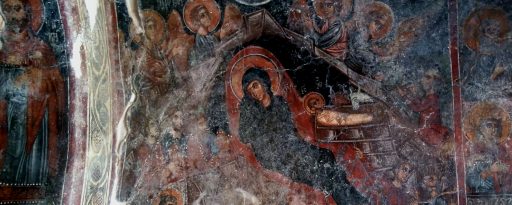
Next, we stop at the Byzantine-Venetian church of Panayia Kera, famous for the lavish frescoes covering every inch of its walls with intricate tales to inspire devotion, a prime example of the island’s Byzantine heritage, here fused with some Venetian influences.
After lunch, we make our way to the island’s south coast to the pleasing town of Ierapetra, blessed with a broad beach, amazing skyscapes and perfect sunsets. We spend the next three nights in the comfort of a modern hotel set on the curving shore fringed by mountains constantly enlivened by changing shadows, looking over the topaz blue waters of southeast Crete.
Next, we stop at the Byzantine-Venetian church of Panayia Kera, famous for the lavish frescoes covering every inch of its walls with intricate tales to inspire devotion, a prime example of the island’s Byzantine heritage, here fused with some Venetian influences.
After lunch, we make our way to the island’s south coast to the pleasing town of Ierapetra, blessed with a broad beach, amazing skyscapes and perfect sunsets. We spend the next three nights in the comfort of a modern hotel set on the curving shore fringed by mountains constantly enlivened by changing shadows, looking over the topaz blue waters of southeast Crete.
Day 4: Retracing our steps a little, we cross the narrow isthmus to the north coast to the incredibly well-preserved Minoan town of Gournia, where we can walk along the 3,500-year-old streets and alleyways hugging the flanks of a rocky hill overlooking the sea. House after Bronze Age house gives us the best impression we can get of ordinary daily life, and above them stands an impressive public building with clues to the deep religious devotion of the settlement’s people.
We next take a chance to begin populating the sites we’ve seen with the objects their inhabitants used: beautifully painted pottery vessels and stands, burial boxes and bathtubs, intricately carved stone shells and charming figurines and statuettes – some, like the ‘Goddess of Myrtos’ from very early on indeed. All this is magnificently displayed in the recently re-opened Agios Nikolaos Museum.
After lunch, we return to Ierapetra to enjoy the splendour of the dramatic hills, or drink in the magnificence of the seaward view as clouds and light work their magic.
We next take a chance to begin populating the sites we’ve seen with the objects their inhabitants used: beautifully painted pottery vessels and stands, burial boxes and bathtubs, intricately carved stone shells and charming figurines and statuettes – some, like the ‘Goddess of Myrtos’ from very early on indeed. All this is magnificently displayed in the recently re-opened Agios Nikolaos Museum.
After lunch, we return to Ierapetra to enjoy the splendour of the dramatic hills, or drink in the magnificence of the seaward view as clouds and light work their magic.
Day 5: We head east along the island’s impressive north coast, riding high above outstanding vistas of the Bay of Mirabello and the island of Pseira until we reach the town of Siteia. Here, we briefly dip in to see a highlight of the archaeological museum, the famous gold-and-ivory Palaikastro ‘Kouros’, a superb piece of Bronze Age sculpture, painstakingly restored from the hundreds of fragments it was left in after its last time above ground, three and a half millennia ago.
Keen to know more about the site where it was discovered, we carry on to the far eastern coast and the Minoan town of Palaikastro, where excavations continue to reveal new details of the Minoan world, to learn of its heyday and its violent destruction. We discover the Kouros' fate and hear about the unusual Cretan cult of the Young Zeus.
Turning south through bare but awesome and remote country, we come to one of the most extraordinary and inspiring views in Crete. Descending into a secluded bay, we lunch close to the crashing waves of the perfect beach at Kato Zakros, in an ‘island’ of rich farmland cut off by magnificent bleak hills and the Gorge of the Dead. With this amazingly scenic backdrop, we then tour the Minoan town and palace of Zakros itself, an artistic centre whose craftsmen produced some of the finest masterpieces of Minoan civilisation and whose trading contacts reached out to Egypt and beyond before it was brought down in flames. In the afternoon, we return to our hotel through more of the distinctive, rugged, chasm-torn east. The evening is free to dine at your leisure.
Keen to know more about the site where it was discovered, we carry on to the far eastern coast and the Minoan town of Palaikastro, where excavations continue to reveal new details of the Minoan world, to learn of its heyday and its violent destruction. We discover the Kouros' fate and hear about the unusual Cretan cult of the Young Zeus.
Turning south through bare but awesome and remote country, we come to one of the most extraordinary and inspiring views in Crete. Descending into a secluded bay, we lunch close to the crashing waves of the perfect beach at Kato Zakros, in an ‘island’ of rich farmland cut off by magnificent bleak hills and the Gorge of the Dead. With this amazingly scenic backdrop, we then tour the Minoan town and palace of Zakros itself, an artistic centre whose craftsmen produced some of the finest masterpieces of Minoan civilisation and whose trading contacts reached out to Egypt and beyond before it was brought down in flames. In the afternoon, we return to our hotel through more of the distinctive, rugged, chasm-torn east. The evening is free to dine at your leisure.
Day 6: Today is a day of contrasts as we leave the parched, hard land of east Crete to travel to our next home in one of its greenest and most productive regions. We’ll head west along the south coast and, with stops en route, make our way to the rich Mesara plain. On arrival, we make our way to Agia Triada to disentangle the complex ruins of a finely-equipped, though not huge, Minoan town and a villa that may have been a summer residence for the Bronze Age rulers of southern Crete. We’ll hear about the incredibly rich finds made here, ready to admire them up close when we visit the Archaeological Museum in Heraklion at the end of the tour. It’s a site which was one of the last glowing embers of Minoan civilisation, when all else lay in ruins, a story we’ll hear more of later.
A short journey brings us to our next hotel, perfectly located in the heart of this historic, bountiful plain.
A short journey brings us to our next hotel, perfectly located in the heart of this historic, bountiful plain.
Day 7: The day is devoted to the Minoan presence in the Mesara, Crete’s largest plain and agricultural heartland. Our first visit is to the Minoan Palace of Phaistos, arguably the most beautiful of its kind, perched on a jutting spur that seems to leap into space high over the lush valley in a striking setting overlooked by snow-capped Mount Ida, the island’s towering central peak.
Coming down from the ridge upon which Phaistos lies, we head to the village of Voroi. If possible, we’ll make a short visit to the excellent and award-winning folklore museum here, to see the impressive handiwork wrought in more recent centuries by the hands of virtuoso craftspeople in weaving, basketry, beekeeping and the other skills of traditional rural life. And then we’ll head to a real treat, with a fine welcome at the Alekos restaurant for some of the best food in Crete.
Well-pleased with lunch, we return to the green expanse of the Mesara Plain, to investigate the island’s Roman and Early Byzantine capital, Gortyn. We visit the heart of this once extensive site, still under excavation. At the heart of what can be visited is one of the most important finds from post-Minoan Crete, the famous Gortyn Law Code. This is one of the longest ancient Greek inscriptions ever found and hugely informative for our understanding of city-state laws and the workings of daily life, especially for those who tend to get left out of the histories. An easy stroll through old olive groves takes us to one of its greatest early Byzantine churches, imposing even as a huge ruin.
Coming down from the ridge upon which Phaistos lies, we head to the village of Voroi. If possible, we’ll make a short visit to the excellent and award-winning folklore museum here, to see the impressive handiwork wrought in more recent centuries by the hands of virtuoso craftspeople in weaving, basketry, beekeeping and the other skills of traditional rural life. And then we’ll head to a real treat, with a fine welcome at the Alekos restaurant for some of the best food in Crete.
Well-pleased with lunch, we return to the green expanse of the Mesara Plain, to investigate the island’s Roman and Early Byzantine capital, Gortyn. We visit the heart of this once extensive site, still under excavation. At the heart of what can be visited is one of the most important finds from post-Minoan Crete, the famous Gortyn Law Code. This is one of the longest ancient Greek inscriptions ever found and hugely informative for our understanding of city-state laws and the workings of daily life, especially for those who tend to get left out of the histories. An easy stroll through old olive groves takes us to one of its greatest early Byzantine churches, imposing even as a huge ruin.
Day 8: In the morning, we visit the nearby Mesara Museum to give the region a rousing send-off. A long-awaited addition to the island’s museums, it’s a fine example of how to display material well. We’ll see finds from sites we’ve visited, as well as some really interesting other ones that round out the local picture. Afterwards, we begin our journey to our next base and say farewell to the Mesara in search of new stories.
We head for north-western Crete, passing through hills, over the coast and into the celebrated Amari valley, famed for its role in the wartime resistance movement. We stop by the Late Minoan-Mycenaean cemetery of Armenoi, its scores of graves delved into the red rock scattered prodigiously in the shady floor of an oak forest. Amid these placid surroundings, we learn about the turmoil the island underwent during and after the 15th century BC and learn about the young people that were laid to rest here, before entering the largest and most elaborate of the tombs.
After lunch and a tasting at a famous winery a little further on in this most fertile part of West Crete, we end the day in the grand Venetian city of Rethymno.
We head for north-western Crete, passing through hills, over the coast and into the celebrated Amari valley, famed for its role in the wartime resistance movement. We stop by the Late Minoan-Mycenaean cemetery of Armenoi, its scores of graves delved into the red rock scattered prodigiously in the shady floor of an oak forest. Amid these placid surroundings, we learn about the turmoil the island underwent during and after the 15th century BC and learn about the young people that were laid to rest here, before entering the largest and most elaborate of the tombs.
After lunch and a tasting at a famous winery a little further on in this most fertile part of West Crete, we end the day in the grand Venetian city of Rethymno.
Day 9: In the morning, we tour the Fortezza, the well-preserved Venetian fortress whose frowning, mighty walls dominate Rethymno, commanding wide views across the Cretan Sea and the mountains to the west and east and begin our acquaintance with the story of the Ottoman conquest of the island.
We then head out of town, wending our way into the hill country to the south and a very special place for lunch in Asteri. Not only is this a place where superb cooking is to be sampled, the restaurant comes with its own folk museum attached! Afterwards, heading further into the hills, we make our way inland to Eleutherna, one of Crete’s oldest and most important ancient cities, set in the beautiful Amari valley and the site of ongoing and superbly productive excavations. Its recently opened archaeological museum is eye-opening, revealing the broad trading contacts and considerable wealth that existed here in the Early Iron Age, just as the city-states began to develop. The rich burials of its warriors and priestesses are an outstanding highlight of this great display. The evening is free to dine at your leisure.
We then head out of town, wending our way into the hill country to the south and a very special place for lunch in Asteri. Not only is this a place where superb cooking is to be sampled, the restaurant comes with its own folk museum attached! Afterwards, heading further into the hills, we make our way inland to Eleutherna, one of Crete’s oldest and most important ancient cities, set in the beautiful Amari valley and the site of ongoing and superbly productive excavations. Its recently opened archaeological museum is eye-opening, revealing the broad trading contacts and considerable wealth that existed here in the Early Iron Age, just as the city-states began to develop. The rich burials of its warriors and priestesses are an outstanding highlight of this great display. The evening is free to dine at your leisure.
Day 10: Our main morning visit is to the vast Classical and Roman city of Aptera, sprawling prodigiously over a mighty eminence with impressive views over the blue Souda Bay, one of the Mediterranean’s greatest harbours, with spectacular receding panoramas of mountain and shore. We’ll take in the grand Graeco-Roman theatre and the huge cisterns that fed its Roman baths, all now watched over by a formidable Ottoman stronghold.
A further drive takes us to the Akrotiri peninsula, where we visit the serenely beautiful Venetian-era monastery of Agia Triada, whose sienna-hued walls and welter of picture postcard viewpoints beg for a painter or photographer to immortalise them. If your tastes run to, well, tastes, there’s the traditional olive press and the monastery’s organic oils and wines that need attending to.
We descend via the shore of the magnificent long arm of the Bay of Souda, where we stop to pay our respects at the island’s British and Commonwealth war cemetery, set in a location central to the tragic events of the 1941 Battle of Crete. A little further on, and we are at our next base, a historic seafront hotel in the beautiful Venetian city of Chania, our base for the next two nights.
A further drive takes us to the Akrotiri peninsula, where we visit the serenely beautiful Venetian-era monastery of Agia Triada, whose sienna-hued walls and welter of picture postcard viewpoints beg for a painter or photographer to immortalise them. If your tastes run to, well, tastes, there’s the traditional olive press and the monastery’s organic oils and wines that need attending to.
We descend via the shore of the magnificent long arm of the Bay of Souda, where we stop to pay our respects at the island’s British and Commonwealth war cemetery, set in a location central to the tragic events of the 1941 Battle of Crete. A little further on, and we are at our next base, a historic seafront hotel in the beautiful Venetian city of Chania, our base for the next two nights.
Day 11: Chania is a particularly lovely historic town with things to see in every nook, cranny and alleyway. We spend part of the morning exploring the most attractive and historic of them after a visit to the Archaeological Museum, newly-opened and absolutely world-class: a real example for other museums to follow, with some outstanding exhibits, beautifully displayed. The rest of the day is yours, either to spend more time at the museum, return and explore the seafront and the intricate Venetian streets and archaeological remains nearer the hotel, relax by the clear waters of the harbour, or dive in and go shopping in the more bustling parts!
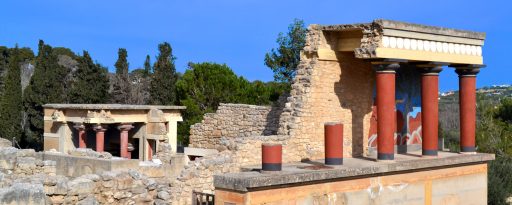
Day 12: It’s time to head east for a major highlight of the tour which you’re now fully-informed to appreciate properly: Crete’s most famous archaeological site, the great Minoan Palace of Knossos, the oldest, largest, and most elaborate of these sites. We’ll hear of its long history, its place in myth and learn of its discovery by Sir Arthur Evans and the controversial but iconic reconstructions he made on the site, which leave such an indelible impression. In its wide courts, shaded colonnades and intricate arrangements of room after room, floor after floor, we can really get to grips with what these palaces looked like and think about what they were for, who lived in them and how they functioned in still-debated ways in Minoan society.
After lunch nearby, we make our grand return to Heraklion and the Galaxy Hotel. In the early evening, there’ll be a walking tour of the massive Venetian fortifications of what was then called Candia and the story of the longest siege in history at places whose terrifying past is masked by now pleasant boulevards, parks and play areas for children. We head into the historic centre to encounter the city’s long Venetian story before our evening meal.
After lunch nearby, we make our grand return to Heraklion and the Galaxy Hotel. In the early evening, there’ll be a walking tour of the massive Venetian fortifications of what was then called Candia and the story of the longest siege in history at places whose terrifying past is masked by now pleasant boulevards, parks and play areas for children. We head into the historic centre to encounter the city’s long Venetian story before our evening meal.
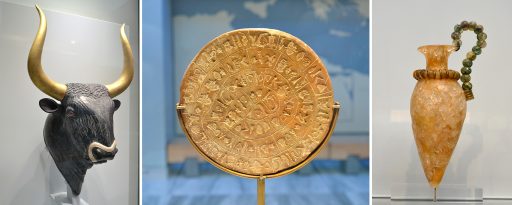
Day 13: A short journey into Heraklion’s centre brings us to the superlative Archaeological Museum, housing one of the world’s most important exhibits of prehistoric art and artefacts, a magnificent showcase of Minoan culture and the Greek and Roman ages in Crete. Our extensive tour takes in many wonders: the stunning achievements of Minoan potters, delicate works in ivory, painstakingly carved stone vases with rituals and myth played out on them, elaborate jewellery of gold and precious stones, masterpiece offerings to the deities whose images they bear. We’ll see the world-class collection of famous and evocative fresco paintings from Knossos - lithe bull-leapers and the sinuous, privileged elite of Knossos. And we’ll finally be able to satisfy our curiosity by getting up close to some of the amazing artworks we’ve talked about at their original find-spots earlier in our tour.
A short walk after lunch brings us to a grand theatre for our final visit, the Rocca fortress at the mediaeval harbour of Heraklion. Here, at the summit of this picturesque Venetian castle with its own nautical archaeology museum, with views of Venetian warship-sheds and the mountains and glistering seas of Crete, we’ll wrap up our tour. You’ll have time to shop, explore the city or fit in a last museum if you like before our final meal together in the evening. What a tour, and what an island!
A short walk after lunch brings us to a grand theatre for our final visit, the Rocca fortress at the mediaeval harbour of Heraklion. Here, at the summit of this picturesque Venetian castle with its own nautical archaeology museum, with views of Venetian warship-sheds and the mountains and glistering seas of Crete, we’ll wrap up our tour. You’ll have time to shop, explore the city or fit in a last museum if you like before our final meal together in the evening. What a tour, and what an island!
Day 14: Transfer to Heraklion airport.
I would like to book, what else do I need to know?
For information not covered below please refer to our FAQ’s or contact us directly on [email protected]
Arrival and Departure Information
Arrival Airport – Crete (Heraklion)
Departure Airport – Crete (Heraklion)
Check in time at our hotel in Heraklion is after 14:00 so we recommend choosing a flight that arrives mid to late afternoon. Check out time is 11:00. We will arrange local transfers from Heraklion airport and to Heraklion airport on the first and last day of the tour.
Booking Flights The cheapest way to book flights is directly with the airline online.
If you prefer to book with a travel agent, we are happy to recommend specialists in a number of countries around the world, please contact our office for more details.
Travel Insurance:We consider adequate travel insurance to be essential. You should ensure that you take out a suitable policy, to make sure that your trip is properly covered.
The European Union’s Entry/Exit System (EES) and the European Travel Information and Authorisation System (ETIAS).
The Entry/Exit System (EES) is a new digital border management system for registering non-EU nationals travelling for a short stay, each time they cross the external borders of 29 European countries using the system. The EES will modernise border management of the Schengen countries, gradually simplify border controls and prevent identity fraud. ETIAS travel authorisation is an entry requirement for non-EU visa-free nationals.
You find out more about EES & ETIAS using the link below
https://travel-europe.europa.eu/pb
Visas
For UK Nationals, You can travel without a visa to the Schengen area, which includes Greece, for up to 90 days in any 180-day period without a visa.
Citizens of European Union or Schengen Treaty member states need no visa for Greece, those from the United States, Canada and Australia do not need to apply for a visa to visit Greece for trips of less than 90 days duration.
Athens, Crete and the Greek islands If you are planning to stay in Athens before or after your tour we have included below links to more information and things to see and do. If you intend to add time on Crete or any other Greek island, we are happy to offer information and advice.
Further Details about our Exploring Crete tour Our Exploring Crete tour aims to be a truly comprehensive and in-depth introduction to the archaeology, history, culture and landscapes of this great and beautiful island, taking in the most famous of the Minoan sites, as well as locations further off the beaten track and derived from all periods of Crete’s long history.
There can be no doubt that the sites on the itinerary are unusually fascinating and that the various landscapes travelled are especially beautiful, but you need to be aware that the trip is an intensive and occasionally physically demanding one. In contrast to our gulet cruises which tend to visit one ancient city per day, and are designed with rest and relaxation as well as history in mind, our Exploring Crete tour visits at least two archaeological or historical sites on most days. Since the island is a large one and we aim to show all aspects of its natural diversity, some days include relatively long driving times, usually through stunning landscapes. We use a comfortable coach with ample space for all of our group and try, as far as possible, to make sure to arrive at our evening destinations with time to spare for refreshment and relaxation. A free day around the middle of the tour is given over fully to relaxation or exploration at our guests’ individual discretion.
With the exception of the final night, we spend two or more nights at each of the hotels/accommodations on the itinerary. Except at Iraklio, where we use a large and modern city hotel, this itinerary features smaller and family-run boutique hotels, two of them agritouristic projects involving the renovation of remote traditional villages, one a 16th century Venetian town house, and one a fine late 19th century urban seaside villa. Each of them has its own distinctive style, character and atmosphere. They are complemented by meals at a carefully chosen and very personal selection of restaurants reflecting the entire breadth of Cretan culinary tradition, as well as by three wine tastings at some of the islands’ best wineries.
The sites themselves often have rough and uneven terrain with loose stones underfoot, so guests must be fit and well to take part in this tour.
Our Exploring Crete tour is a unique archaeological, cultural and gastronomic experience, in a small group and with highly experienced specialised guides. You will complete it feeling a real connection with and understanding of one of the Mediterranean’s most fabled islands.
Tour Includes:
Accommodation – we use high standard 3-5* hotels with character
All meals (except 1 lunch and 3 dinners) including water, tea and coffee and wine with dinner
The services of your expert tour leaders throughout the entire trip
Airport transfers on first and last day of tour
Travel by private minibus
All entrance fees
All tips to restaurant and hotel staff
Hotel taxes
Not included:
Flights and airport taxes
Visas
Travel insurance
Tips for drivers
Tips for guides
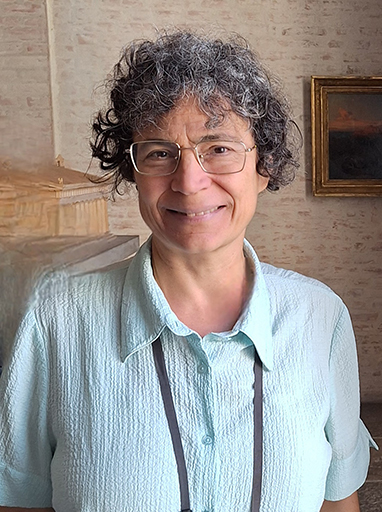
Maria Girtzi
Born in Thessaloniki, Maria is an Archaeologist and professional tour guide. She studied Archaeology and Art at the Aristotle University of Thessaloniki and did her postgraduate studies on Greek Archaeology (MA and PhD.) at the University of Birmingham in the UK. She has taught History, Archaeology and Art history at the Universities of Thrace, Birmingham (UK), Cornell (USA), the Hellenic Open University and the Open University of Cyprus as well as working as a field archaeologist on excavations in Macedonia, Thrace and on Crete. Maria is the author of the book “Historical Topography of Ancient Macedonia”.
A great believer in “lifelong learning” she is involved in the design and implementation of educational programs that appeal to a wide range of ages (primary-secondary education and adults) and is an expert of the Institute of Educational Policy in Educational Programs. We are delighted to welcome her as part of our team.
What previous guests have to say about Maria:
"Maria is a terrific guide. Her stories and explanations were excellent. She combines deep knowledge with extraordinary organizational skills." Raymond Kulla
"the highlight of the tour was having such a wonderful and accomplished tour leader as Maria. She made all the sites come alive with her dramatic flair in explaining the history, mythology, geography, culture, and even the cuisine of the different localities. I have been on many tours before and never have I had such a marvelous guide as Maria. With her background in archaeology and her experience on digs and her wide knowledge of history, she was truly a ne plus ultra in the guide department. She was also most solicitous of the comfort of each tour member. At the Farewell Dinner we all raised our glasses high to Maria and declared that this had been the best tour we had ever been on! Maria is the most accomplished, knowledgeable, professional, conscientious, and just plain nicest guide I have ever had on a tour!" Louise Lindemann
"Maria our guide was an absolute star - her passion, energy and deep knowledge not only of the archaeology but the region and its people made the whole holiday experience outstanding. She could not have done more to inspire, educate and enthuse us and bring the history alive." Giles Cockerill
"Dr. Maria Girtzi has to be the highlight of the tour. She was truly amazing, she had boundless energy, enthusiasm and joy in sharing her knowledge." Janet Cowell
"a guide whose expert knowledge and passion was transmitted to us with energy and colour. She painted a picture of the past, with readings from ancient historians and philosophers so that the spirit of the archaeology, culture and history meant the ancient world came alive. We were grateful for her generosity in imparting her knowledge and passion for her country. She was also attentive to our appreciation of the food of the places we visited, giving us many great culinary experiences, in addition to attending to our individual needs or requests. We could not have had a more passionate and engaging guide in this region and of the historical periods. She made the tour come alive for us, painting a picture of the past so that we easily followed in the footsteps of the historical giants." Wendy McCartney
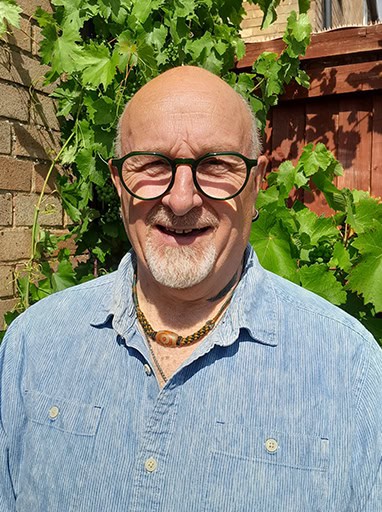
Michael Curtis
Michael is a landscape and coastal archaeologist, author, and broadcaster with a special interest in Roman ports and harbours. He is an Honorary Fellow at the School of Archaeology & Ancient History at the University of Leicester. His academic journey began with undergraduate studies in archaeology at the University of Southampton, followed by a Master's in Archaeology at the University of Nottingham. He attained his PhD. on the Imperial Ports and Harbours of Crete at the University of Leicester.
Michael’s love of archaeology and history began in childhood, and he has been excavating sites for over 50 years. Crete has been Michael's main focus since 2015 – an island he has explored extensively in the books and articles he has written, the papers he’s given at numerous conferences, and on-the-ground fieldwork. Across a wide-ranging life and career, he has worked in the civil service, created fashion and record companies, managed pop bands, set up music concerts and jazz festivals and owned a bookshop. He is now the co-owner of My Ancient World Learning, a company dedicated to lifelong learning in archaeology, ancient history, and classical studies.
Michael brings a wealth of experience to expert-led archaeological tours, having guided groups through diverse historical landscapes—from the prehistoric cave art of the Dordogne to the monumental ancient sites of Greece.
What previous guests have to say about Mike:
"an excellent tour. The itinerary wass thoughtfully constructed to support the narrative of Crete’s history and culture provided by the guides. Mike was very interesting, his insights and support were incredibly valuable." Deborah Hunn
"10/10 across the board." Rick Arnebeck

Peter Tomkins
Peter fell in love with Crete in 1991 on a gap year spent travelling in Greece. Arriving on the island for a planned two-week visit, he was still there three months later pushing a wheel-barrow for the British School excavations at the Bronze Age town of Palaikastro in East Crete. After reading Classics at Oxford, the call of Cretan prehistory became too great to ignore and, after an MA in Archaeology at University College London, there followed a PhD thesis on the Cretan Neolithic at the University of Sheffield. Since then, he has held a series of research and teaching posts at universities and research institutions in the U.K., Belgium, Greece and Italy. He is a specialist on the Neolithic and Bronze Age of the Aegean with a focus on Crete, where he has been involved in the study of many sites around the island, most notably the site of Knossos. Currently a post-doctoral researcher at the University of Catania, Peter is writing a monograph on Neolithic Knossos, where he also co-directs a team of specialists preparing the publication of the Neolithic excavations.
What previous guests have to say about Peter:
"A superb guide and expert in the history and archeology of Crete. Peter's 30 years of experience on Crete provided unparalleled insight into the ancient culture. He helped create a wonderful spirit of kindness, humor, and camaraderie among all of the travelers." Deborah Goldberg
"Knowledgeable, informative and accessible. He brought Cretan prehistory and history to life. He was also personable, caring, and fun to be with." Reg Whitaker
"Peter's knowledge of the Minoan era is second to none but I was also impressed by his telling of World War Two in Crete and his personal link to that time. He also showed quiet and unobtrusive concern for all of the group who was not as mobile as the rest." Diana May
"Knowledgeable, friendly, and engaging." Alyson Ward
"Peter was phenomenal. An excellent guide. Extremely knowledgeable, very thoughtful and very friendly." Terry O'Rourke
"Peter and his fellow guide Maria worked well together and gave us a wonderful experience to see (with some imagination), feel (by being in the same place) and taste the influences of many different peoples over the ages in Crete and beyond! Peter was so passionate about his field, potential new finds and new ways of looking at the past! It was exciting to have Peter on the tour given his background, fields of interest, knowledge and ability to make it understandable to us!" Annabelle Irey

What is the focus of your Exploring Crete tour?
How demanding is the walking on this tour?
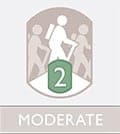
Our Exploring Crete tour is rated 2 out of 5 on our intensity scale, meaning it is classed as moderate. A reasonable level of fitness is required, but the walks are gentle and not too demanding. You can find out more by visiting the fitness levels page on our website.
Who leads your Crete tour?
Your expert guides are archaeologists and historians with long experience working in Crete. Their knowledge of the island from the Bronze Age Minoan civilisation through the classical world of Greece and Rome, through the Byzantine, Venetian, and Ottoman periods together with Crete’s living traditions brings each site, museum and landscape vividly to life. Please click on the tour experts’ names under the tour dates to read full bios and testimonials.
What is included in the tour price?
Accommodation, most meals, all entrance fees, transport to sites, expert guiding, and transfers on the first and last days of a tour are included, together with water, teas and coffees and wine with dinner. Special tastings and culinary experiences that showcase Crete’s exceptional produce are also included as part of the tour. Flights are not included. Please refer to the Inclusions tab for full details.
What kind of accommodation can I expect on the Exploring Crete tour?
We stay in carefully chosen, small characterful hotels that reflect the spirit of Crete, often family‑run, always comfortable, and ideally located for exploring the island’s landscapes and archaeological sites. Many offer sea or countryside views and help to give an insight into traditional Cretan hospitality, adding to the sense of place.
When is the best time to travel to Crete?
Spring and autumn are the perfect times, with warm weather, beautiful light and landscapes at their most gorgeous, while avoiding the heat and crowds of summer. These seasons offer excellent walking conditions, quieter archaeological sites and the chance to enjoy Crete’s food culture at its freshest, from spring herbs to autumn harvests.